
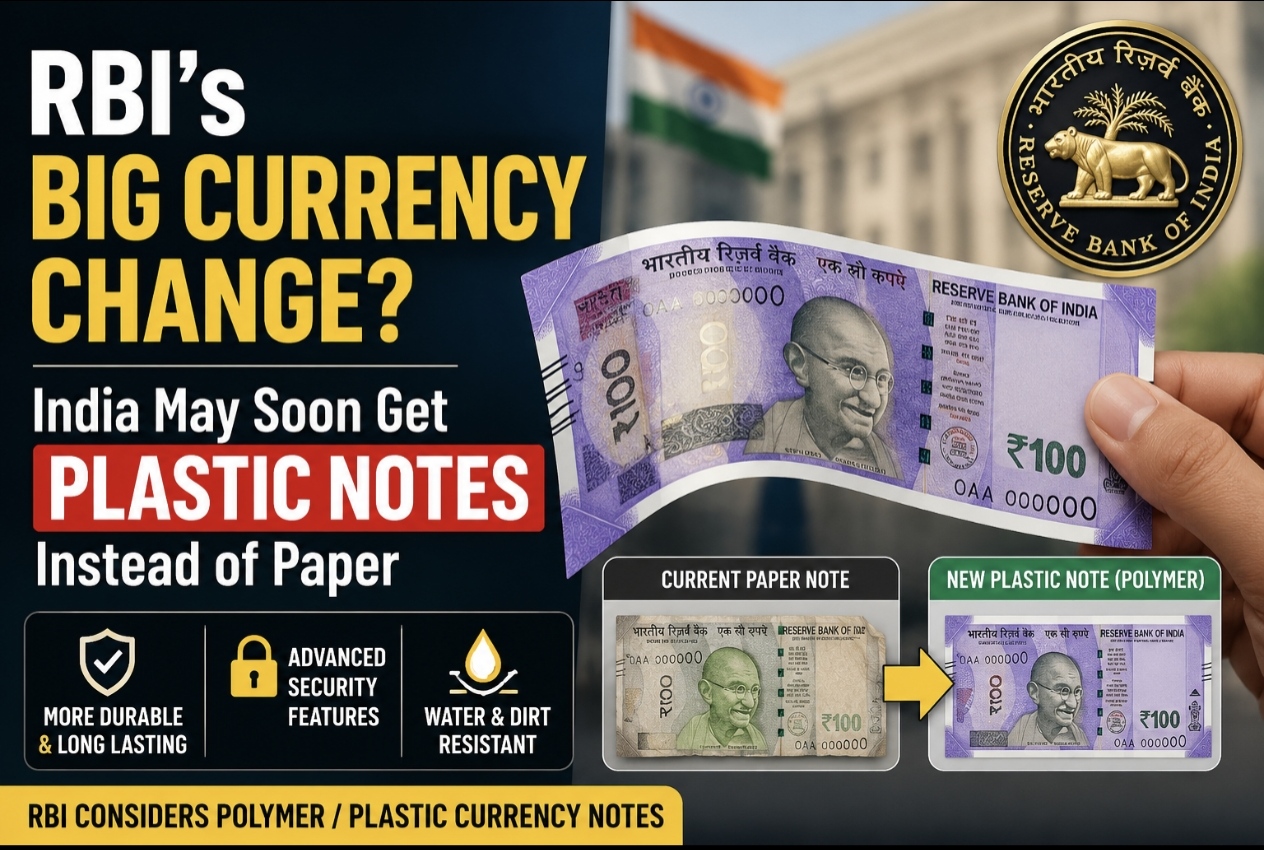
🇮🇳 Will India Soon Get Plastic Currency Notes? RBI’s Big Move Could Change the Way We Use Cash
Meta Description
RBI is reportedly planning to introduce plastic currency notes in India. Know why polymer notes are being considered, their benefits, security features, and what it means for everyday users.
RBI May Bring Plastic Currency Notes to India: Here’s What It Could Mean for You
Imagine accidentally leaving a ₹500 note in your jeans pocket, only to find it perfectly fine after a wash. Sounds surprising, right? That could soon become a reality if India moves towards plastic currency notes.
Recent reports suggest that the Reserve Bank of India (RBI) is once again exploring the idea of introducing polymer or plastic banknotes. While no official launch date has been announced yet, the development has generated significant interest among citizens and financial experts alike.
💰 Why Is RBI Thinking About Plastic Notes?
Let’s be honest—most of us have come across torn, dirty, faded, or damaged currency notes at some point. These notes often need replacement, which adds to the government’s printing costs.
Plastic notes could help solve many of these problems.
Unlike traditional paper notes, polymer notes are stronger, cleaner, and can survive everyday wear and tear much better. They also remain in circulation for a longer period, reducing the need for frequent replacements.
📌 What Exactly Are Plastic Currency Notes?
Plastic currency notes are not made from ordinary plastic. They are produced using a special polymer material designed specifically for banknotes.
Many countries such as Australia, Canada, Singapore, and the UK have already adopted polymer currency because of its durability and advanced security features.
These notes look modern, feel different from paper notes, and are much harder to damage.
🔒 Stronger Security Against Fake Currency
One of the biggest advantages of polymer notes is enhanced security.
Counterfeit currency remains a challenge for central banks around the world. Polymer notes can include features that are difficult to copy, such as:
- Transparent security windows
- Advanced holograms
- Color-changing elements
- Micro-text printing
- Special security threads
These features make fake notes easier to identify and harder to produce.
🌧️ Water, Dirt, and Damage? Less of a Problem
Indian currency often passes through hundreds of hands before reaching a bank again. During this journey, notes can get dirty, torn, folded, or even wet.
Polymer notes are much more resistant to moisture and damage. They stay cleaner for longer and maintain their appearance even after extensive use.
For ordinary people, this means fewer rejected notes and less hassle during transactions.
🌍 India Would Not Be Alone
Several countries have already switched from paper currency to polymer notes with positive results.
Australia was among the first nations to adopt polymer currency. Since then, countries including Canada, New Zealand, Singapore, and the United Kingdom have followed the same path.
These countries have reported lower counterfeiting rates and longer-lasting banknotes.
📅 When Could Plastic Notes Arrive in India?
At the moment, RBI has not made any official announcement regarding the launch.
Reports indicate that the central bank may first conduct a pilot project or limited trial before introducing polymer notes on a larger scale.
If the trials are successful, India could gradually begin issuing plastic notes in selected denominations.
🤔 What Happens to Existing Notes?
There is no need to worry.
Even if plastic notes are introduced, your current ₹10, ₹20, ₹50, ₹100, ₹200 and ₹500 notes will not suddenly become invalid.
Typically, old and new notes circulate together for a considerable period before any major transition takes place.
🏦 A Small Change with a Big Impact
For most people, a currency note is just a piece of paper used for daily transactions. But for a country, maintaining billions of notes is a massive task.
If India adopts polymer currency, the move could help reduce replacement costs, improve security, and provide citizens with cleaner and more durable notes.
While the proposal is still under discussion, it is certainly one of the most interesting developments in India’s financial system in 2026.
Final Words
The possibility of plastic currency notes coming to India marks another step toward modernizing the country’s banking and financial infrastructure. Whether you’re a shopkeeper, salaried employee, student, or business owner, this change could eventually affect how you handle cash every day.
For now, all eyes are on RBI as people wait for an official announcement regarding India’s potential shift from paper to polymer currency.