
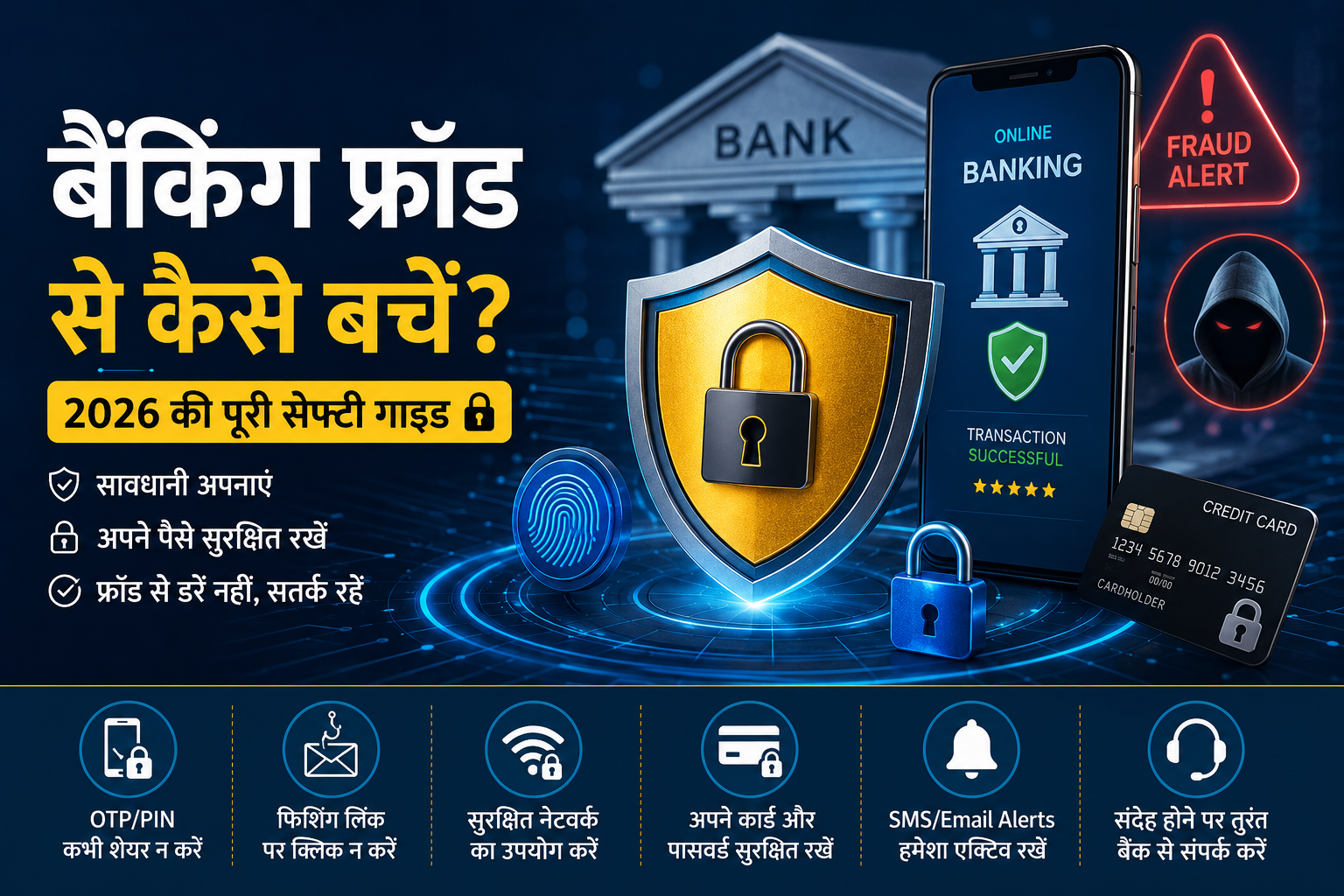
UPI safety is something every Indian who pays with Google Pay, PhonePe, Paytm or BHIM UPI needs to take seriously. UPI has made payments instant and free, but it has also become the favourite hunting ground of fraudsters. Every day, people lose money to fake payment requests, QR code scams and fake customer care numbers. This guide explains the most common UPI frauds in India and the simple rules that will keep your money safe.
How UPI Fraud Works
UPI fraud almost always starts with trust. A fraudster calls, messages or advertises as a bank employee, a customer care executive, a buyer on an online marketplace, or even a friend in an emergency. Their goal is always the same: to get you to share your UPI PIN or OTP, or to make you approve a payment yourself. Remember the golden rule — no bank, no UPI app and no government agency will ever ask for your UPI PIN, OTP or password. Anyone who asks is a fraudster.
7 Common UPI Frauds in India
1. Fake collect requests
You receive a “collect” or “request money” notification in your UPI app, often with a message saying it is a refund or a prize. Approving it SENDS money from your account. Never approve a collect request from a stranger.
2. QR code scams
A fraudster sends you a QR code and says you will RECEIVE money by scanning it. In reality, scanning a QR code in a UPI app is for MAKING a payment. Never scan a QR code to receive money — genuine payments to you need no QR scan.
3. Fake customer care numbers
Search results and social media are full of fake helpline numbers for banks and UPI apps. Calling them connects you to fraudsters who ask you to install a remote-access app or share your PIN. Always use the support number shown inside the official app.
4. KYC update and account blocking messages
You get an SMS or WhatsApp message saying your account will be blocked unless you update your KYC through a link. The link installs malware or opens a fake page that steals your login details. Banks never ask you to update KYC through a link in a message.
5. Screen-sharing apps
A fraudster asks you to install an app like AnyDesk or TeamViewer to “fix” a problem or process a refund. Once installed, they can watch everything on your screen — including your PIN as you type it.
6. Fake cashback, lottery and job offers
“You have won a prize — pay Rs. 100 as a processing fee through UPI.” Real lotteries, cashback offers and employers never ask you to pay first.
7. SIM swap fraud
A fraudster gets a duplicate SIM issued in your name, receives your OTPs, and drains your account. If your phone suddenly loses network for a long time for no reason, contact your mobile operator and your bank immediately.
10 Rules to Stay Safe on UPI
- Never share your UPI PIN or OTP with anyone — not even bank staff.
- Never approve a collect request from someone you do not know.
- Never scan a QR code to RECEIVE money — QR codes are for paying.
- Check the receiver’s name carefully before confirming every payment.
- Never install screen-sharing apps at a stranger’s request.
- Download UPI apps only from the official Google Play Store or Apple App Store.
- Set a daily transaction limit in your UPI app and keep it as low as practical.
- Turn on SMS and app alerts for every transaction and read them.
- Do not click links in SMS or WhatsApp messages about KYC, refunds or account blocking.
- Keep your UPI app and phone software updated.
What to Do If You Have Been Defrauded
Act fast — the first hour is called the “golden hour” because quick reporting gives the best chance of freezing the money.
- Call the National Cybercrime Helpline 1930 immediately and report the fraud.
- File a complaint at cybercrime.gov.in with the transaction details.
- Inform your bank and ask them to block the transaction and your account if needed.
- Save screenshots of the messages, phone numbers and transaction IDs as evidence.
- Change your UPI PIN and passwords.
If you report within the golden hour, banks and the police can often freeze the fraudster’s account before the money is withdrawn.
Frequently Asked Questions (FAQ)
Q1: Can someone steal money from my account just by knowing my UPI ID?
No. Knowing your UPI ID (like name@okhdfcbank) is not enough — money can only be taken with your UPI PIN, or by making you approve a payment. But never share your PIN or OTP.
Q2: I approved a collect request by mistake. What now?
Call 1930 and your bank immediately. The faster you report, the better the chance of recovering the money.
Q3: Is it safe to keep a large balance in a UPI-linked account?
Keep only the money you need for daily spending in the account linked to UPI. Keep your savings in a separate account that is not linked to UPI apps.
Q4: Are UPI Lite and UPI AutoPay safe?
Yes, when used carefully. UPI Lite is meant for small payments without a PIN, so keep its balance small. Review your AutoPay mandates regularly and cancel any you do not recognise.
Conclusion
UPI is safe when you follow the basics: never share your PIN or OTP, never approve unknown collect requests, never scan a QR code to receive money, and never install apps at a stranger’s request. Fraudsters succeed by creating urgency and fear — slow down, verify through the official app or bank, and you will stay safe. Share this guide with your parents and family members, who are the most common targets of UPI fraud.
UPI Safety: Key Points
UPI safety starts with three rules — never share your UPI PIN or OTP, never approve a collect request from a stranger and never scan a QR code to receive money. If a fraudster pressures you, stop and verify through your bank’s official number. For wider banking fraud protection, read our banking fraud se kaise bachein guide, and if money is already lost, see bank khate mein fraud transaction ki shikayat kaise karein. For official UPI rules and safety tips, check NPCI. Report fraud within the golden hour — call 1930 or visit the cybercrime portal.
1 thought on “UPI Safety Guide 2026: How to Protect Yourself from UPI Fraud”