
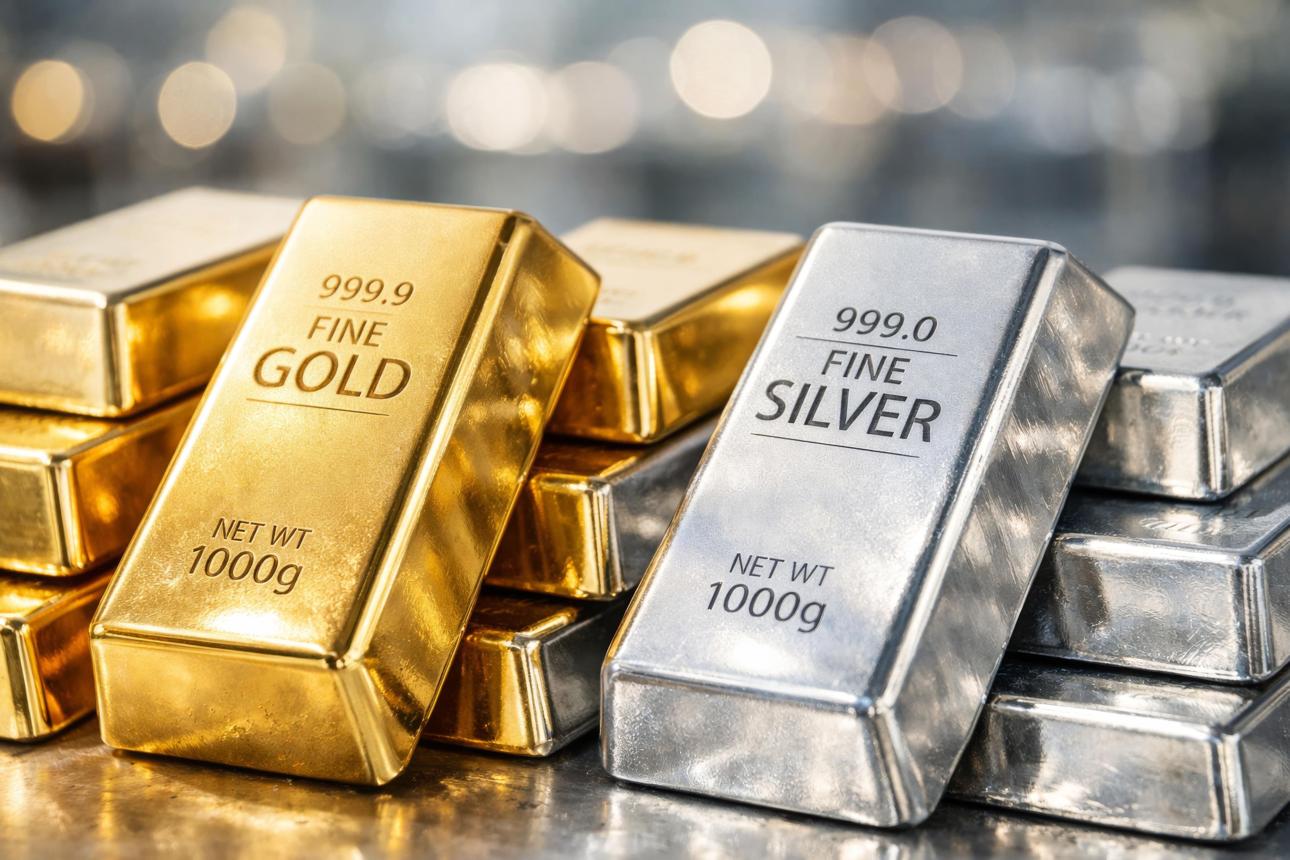
Should You Buy Gold or Silver in 2026? Which Is Better for Investment?
Gold vs Silver Investment in India: Returns, Risks, Future Outlook and What Investors Should Know
Imagine you have ₹1 lakh in your savings account. You want to invest it somewhere, but the stock market feels risky, fixed deposit returns seem limited, and gold and silver prices have recently seen sharp fluctuations.
Now comes the big question: Should you buy gold or silver in 2026?
This is a question many Indian families and investors are thinking about. Some people believe gold is always a safe investment, while others feel silver could offer better returns because of its growing industrial demand.
But the reality is a little different.
Gold and silver are both valuable metals, but they behave differently in the market. One is traditionally associated with financial security, while the other offers exposure to both investment demand and industrial growth.
So, before putting your hard-earned money into either metal, let’s understand which one may be the better choice.
Why Are People Talking About Gold and Silver in 2026?
If you follow financial news regularly, you may have noticed that gold and silver prices have experienced considerable ups and downs in 2026.
Whenever prices rise, investors worry about missing an opportunity. When prices fall, many start wondering whether this is the right time to buy.
This is completely natural.
In India, gold is not just another investment. For many families, it represents years of savings, financial security and something valuable to pass on to the next generation.
Silver also has a special place in Indian households, but its investment story is changing. Apart from jewellery and coins, silver is increasingly important for industries such as solar energy, electronics and electric vehicles.
This combination of traditional demand and industrial use makes both metals interesting to watch.
Gold Investment in 2026: Is It Still a Good Choice?
Gold has earned people’s trust over generations. Whether it is a wedding, a festival or a difficult financial situation, gold has often been considered a dependable asset.
But should you buy it purely because its price has fallen?
Not necessarily.
Gold prices are influenced by several factors, including global economic uncertainty, interest rates, the US dollar and central bank purchases.
Why investors still prefer gold
1. A traditional store of value
Many investors purchase gold because they want to hold an asset outside the banking and stock market systems. Over long periods, gold has historically helped preserve purchasing power, although it does not guarantee returns.
2. Protection during uncertain times
When investors become worried about global economic conditions, gold often attracts attention as a safe-haven asset.
3. Easy to buy and sell
Gold is widely recognised in India. Investors can purchase physical gold, coins, bars and Gold ETFs.
4. Portfolio diversification
If your entire investment is in bank deposits or equity funds, a limited allocation to gold may help diversify your portfolio.
What are the disadvantages?
Gold is not a perfect investment.
- Its prices can fall, sometimes sharply.
- Jewellery involves making charges and other expenses.
- Physical gold needs secure storage.
- Gold does not pay monthly interest or dividends.
For someone looking for regular income, gold may not be the right choice.
Silver Investment in 2026: Is It an Opportunity?
Silver is often called the more volatile cousin of gold.
Why? Because its price is influenced not only by investment demand but also by industrial consumption.
Think about solar panels, electronic products, electric vehicles and other modern technologies. Silver plays an important role in several of these industries.
As these sectors develop, demand for silver may receive support. However, industrial growth does not mean silver prices will always rise.
Why investors are interested in silver
1. Growing industrial applications
Silver is used in electronics, solar energy, electrical equipment and several other industries.
2. Potential for higher price movements
Silver can rise sharply during favourable market conditions. However, the same volatility can also result in substantial losses.
3. An alternative to gold
Investors who already hold gold may consider a smaller silver allocation to diversify their precious-metal investments.
What should you be careful about?
Silver prices can move very quickly.
An investor who purchases silver after a sharp rally may have to wait a long time for the market to recover.
Other risks include storage costs, dealer margins and differences between buying and selling prices.
Therefore, silver is not automatically a bargain just because it costs less per gram than gold.
Gold vs Silver: Which Is Better?
Let’s compare them in simple terms.
| Factor | Gold | Silver |
|---|---|---|
| Price stability | Relatively higher | Relatively lower |
| Risk | Moderate | Higher |
| Industrial demand | Limited | Significant |
| Safe-haven appeal | Strong | Comparatively lower |
| Price volatility | Generally lower | Generally higher |
| Wealth preservation | Traditional preference | More cyclical |
| Investment horizon | Long term | Long term |
| Suitable for | Conservative investors | Higher-risk investors |
If your main objective is financial security, gold may be more suitable.
If you are comfortable with bigger price movements and understand the industrial demand story, silver may be worth considering.
Neither investment guarantees profits.
If You Have ₹1 Lakh, Where Should You Invest?
Let’s take a real-life example.
Suppose you have ₹1 lakh saved specifically for precious-metal investment. You don’t want to take unnecessary risks, but you also don’t want to miss potential opportunities.
Here are three illustrative ways to divide your investment.
Option 1: Gold-focused investor
- Gold: ₹80,000
- Silver: ₹20,000
This approach gives more importance to gold while maintaining some silver exposure.
Option 2: Balanced investor
- Gold: ₹70,000
- Silver: ₹30,000
This offers exposure to both metals, with gold remaining the larger holding.
Option 3: Higher-risk investor
- Gold: ₹50,000
- Silver: ₹50,000
This gives equal exposure to both, but the portfolio may experience greater price fluctuations.
These examples are allocations within a precious-metal investment, not suggestions to put your entire savings into gold and silver.
Personally, investors who are new to precious metals should avoid making large investments in silver simply because they expect prices to recover quickly.
Should You Buy Gold or Silver After the Recent Price Fall?
This is probably the most important question for investors right now.
When prices fall, there are two kinds of reactions.
Some investors panic and sell their holdings. Others see the decline as an opportunity to purchase at a lower price.
Both reactions can be understandable, but there is one important point to remember: a falling price does not necessarily mean the bottom has been reached.
Instead of investing your entire amount on one day, consider dividing the purchase into smaller portions.
For example, if you have ₹60,000 to invest, you could consider investing ₹20,000 at a time over three separate purchases. This approach reduces the pressure of trying to identify the exact lowest price.
It does not guarantee a better return, but it can help manage the risk of entering the market at the wrong time.
How Can You Invest in Gold and Silver in India?
You don’t necessarily need to visit a jewellery shop to invest in precious metals.
Here are some available options.
1. Physical gold and silver
You can purchase coins, bars and jewellery.
If you choose this route, check purity, hallmarking where applicable, GST, making charges and the seller’s buyback policy.
2. Gold and Silver ETFs
ETFs allow investors to get exposure to precious-metal prices through the stock exchange.
They are convenient for people who have a demat and trading account. Check the expense ratio, liquidity and tracking difference before investing.
3. Gold and Silver Mutual Funds
Some mutual fund schemes invest in gold or silver ETFs. These may be convenient for investors who prefer the mutual fund route.
4. Sovereign Gold Bonds
Sovereign Gold Bonds were issued by the Government of India through the RBI and offered gold-price-linked returns along with interest under their terms.
However, investors should check the availability of existing bonds, market prices, liquidity and maturity conditions before purchasing.
Five Mistakes You Should Avoid
Before investing, keep these common mistakes in mind:
- Don’t invest your emergency savings in gold or silver.
- Don’t borrow money to purchase precious metals.
- Don’t purchase simply because someone predicts a big price increase.
- Don’t ignore GST, storage costs and transaction charges.
- Don’t expect to double your investment within a few months.
A good investment decision should be based on your financial situation, not market excitement.
Frequently Asked Questions
Is gold better than silver in 2026?
Gold may be more suitable for investors looking for relatively lower volatility and long-term diversification. Silver may suit investors who can tolerate greater risk.
Is this the right time to buy gold?
Investors with a long-term horizon may consider gradual purchases after assessing current prices and their financial goals. No one can reliably predict the exact market bottom.
Can silver give better returns than gold?
Yes, silver can outperform gold during certain market cycles. However, it can also fall more sharply.
Should beginners invest in gold or silver?
Gold may be a more comfortable starting point for conservative beginners. Silver should be approached carefully because of its higher volatility.
Is physical gold better than Gold ETFs?
Physical gold provides direct ownership, while Gold ETFs offer convenient market exposure without the need for storage. The better option depends on your purpose and costs.
Can gold and silver prices fall further?
Yes. Both metals remain exposed to global interest rates, currency movements, investor sentiment and economic conditions.
Final Verdict: Gold or Silver – What Should You Buy in 2026?
There is no single answer that works for every investor.
If you are someone who values financial security and wants to diversify your long-term savings, gold may deserve more attention.
If you understand market volatility and are comfortable taking additional risk, silver could be considered as a smaller part of your investment portfolio.
For many ordinary Indian investors, a gold-focused approach with limited silver exposure may be a sensible starting point.
But don’t forget one thing: your financial future should not depend entirely on the price of two metals.
Keep emergency savings, maintain appropriate bank deposits, diversify your investments and purchase precious metals according to your financial goals.
Sometimes, the smartest investment decision is not buying everything when prices fall, but having the patience to invest carefully.
Disclaimer: This article is for educational purposes only and does not constitute investment advice. Gold and silver prices fluctuate, and investors should assess their risk tolerance before investing.
यह भी पढ़ें: सोना और चांदी निवेश गाइड 2026: सोना-चांदी से सुरक्षित संपत्ति कैसे बनाएं — सोना और चांदी में निवेश की पूरी जानकारी हिंदी में।
Buy Gold or Silver in 2026: Key Points
Buy gold or silver in 2026 only after deciding your goal — gold suits safety and long-term wealth, silver suits higher-risk investors who understand industrial demand. If you buy gold or silver in 2026, keep precious metals to 5–10% of your portfolio and buy in small parts instead of one big purchase. For the Hindi guide, read सोना और चांदी निवेश गाइड 2026, and for other safe options see safe investment ideas in India. For gold price data and market reports, check the World Gold Council. Never borrow money to buy gold or silver in 2026, and always check purity and making charges.



1 thought on “Should You Buy Gold or Silver in 2026? Which Is Better for Investment?”